

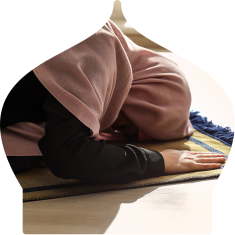
There are no explicit prohibitions on a pregnant person’s right to abort within Islamic law. There is a wide range of interpretation regarding the moral status of a human embryo and the timing of “ensoulment,” the moment Muslims believe the soul is divinely breathed into the body. Based on the hadith, jurists across both Sunni and Shiite traditions often locate this at 120 days after conception. With that being said, the nature of Islamic interpretation allows for a flexible and expansive engagement with religious law, accommodating individual experiences and contemporary circumstances. Islam emphasizes moral agency, or the role of humans as khalifahs, which entails balancing personal, social, and spiritual responsibilities in making ethical decisions.
Some anti-abortion perspectives in Islam focus on the sanctity of potential life and the moral duty to preserve it. These interpretations stress that abortion is impermissible once ensoulment occurs and may only be considered if the mother’s life is at risk. These views argue that the ethical weight of ending a potential life is significant and that adherence to classical jurisprudence ensures that moral and spiritual responsibilities are upheld.
Pro-choice Muslim perspectives highlight the pregnant person’s autonomy and the ethical evaluation of each situation. Organizations like HEART to Grow and Muslims for Progressive Values frame abortion as compatible with Islamic values of compassion, mercy, and social responsibility. Adherents to these movements argue that pregnant people, as moral agents, must be able to make decisions about their bodies, taking into account their personal contexts. In this view, access to abortion is part of ensuring that every birth is meaningful and that the pregnant person’s physical and emotional well-being is respected, reflecting the Qur’anic emphasis on justice, care, and human dignity.